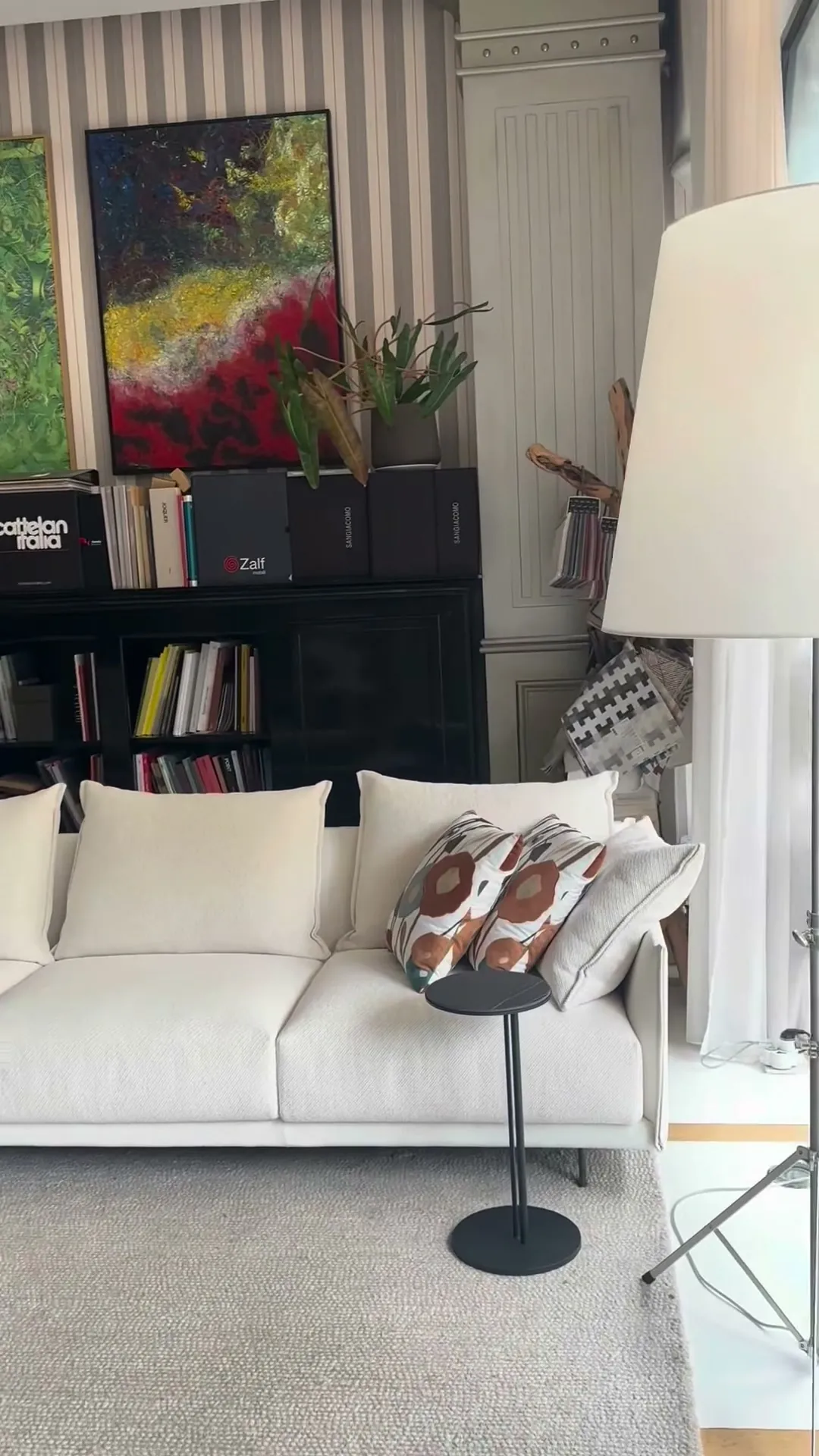
What the sea does to a sofa
A seaside home has four enemies of the sofa. Humidity gets into the fillings and can bring a musty smell. Salt hangs in the air and settles on fabrics and metals. Strong sun fades colours, especially near large windows. And sand, brought in from the beach, acts like fine sandpaper on the fabric.
In Madeira, with many homes facing the ocean and plenty of light all year round, these factors weigh more than in a home inland.
Fabrics: benefits and care
- Solution-dyed acrylic: the colour is added to the fibre during production, not just to the surface. That is why it resists sun fading much better. It is the basis of many outdoor and marine fabrics.
- High-performance fabrics: synthetic fibres with treatments against stains and water. A good choice for holiday homes, families with children and holiday rentals.
- Linen: cool and beautiful, with a relaxed look that suits the sea. It creases, can fade in the sun and can shrink when washed. Choose blends with other fibres.
- Bouclé: a soft, very current texture. The loops of the fabric can trap sand and pet hair. In synthetic versions, it copes better with humidity.
- Velvet: elegant and comfortable. Synthetic velvet holds up better than cotton velvet, which marks and fades in the sun.
- Leather: lasts many years, but dries out and cracks in direct sun and needs regular conditioning.
How to read a fabric's technical sheet
Always ask for the technical sheet. Three details help you decide: light fastness, abrasion resistance and the treatments applied.
Abrasion resistance is measured, for example, by the Martindale test, which counts the rubbing cycles until the fabric wears. The more cycles, the more hard-wearing. Anti-mould and anti-stain treatments are usually finishes applied to the fabric, not a natural quality of the fibre, so check what is stated.
Covers, fillings and frame
Removable covers are the best safeguard for a sofa by the sea. They let you wash out salt and sand and, years later, replace just the fabric.
For fillings, good-density foams keep their shape and dry better than feathers, which absorb moisture. An inner lining separates the foam from the fabric and helps preserve both.
For the frame, well-dried solid wood and fittings treated against corrosion cope better with the salty sea air. Legs that lift the sofa off the floor let air flow underneath and make cleaning easier.
Where to place the sofa and how to look after it
- Avoid direct sun all day. Light curtains or blinds protect the fabric in the brightest hours.
- Leave a few centimetres between the sofa and the wall so air can flow.
- Air the home often and, in homes closed for long periods, consider a dehumidifier.
- Vacuum sand regularly, before it works into the fabric.
- Turn and flip the cushions so they wear evenly.
- Always follow the cleaning instructions on the label and test any product on a hidden corner.
See and touch before you choose
A fabric changes a lot with the light. The same colour can look warm in the shop and cold in a north-facing room. That is why it is best to take samples home and look at them in the morning and in the evening.
At the Traço Elementar shop in Funchal, you can try sofas, including Fama models, and compare fabric samples with the team. If you are looking for a sofa shop in Funchal for a seaside home, bring the measurements of the room and photographs of the light that comes in.
Sources
Related services
In the shop