The five most common ways to charge
Each studio has its own method. Often it combines two of them: a fixed fee for the design and another for overseeing the works. What matters is to understand what each model includes, so you can compare proposals fairly.
- Per room: useful when you only want to work on the living room, the kitchen or one bedroom. The fee changes with how complex each space is.
- Per square metre: common for whole homes and for holiday rental projects. The larger the area, the more design and coordination work.
- Fixed fee: the scope is agreed at the start, with a set number of revisions. It gives certainty to anyone working to a tight budget.
- Percentage of the cost of the works: used mainly when the studio manages the works from start to finish. The fee follows the size of the job.
- By the hour: suited to one-off advice, such as choosing colours, fabrics or lighting, or reviewing an existing floor plan.
What makes the cost change
Two homes of the same size can receive very different proposals. What counts most is the work the project needs, not just the square metres.
- Condition of the home: decorating a finished flat is not the same as renovating an old house with new bathrooms and a new kitchen.
- Level of detail: a simple layout plan takes fewer hours than a full project with elevations, 3D images and made-to-measure furniture.
- Overseeing the works: site visits, meetings with contractors and keeping to deadlines are hours of work that go into the proposal.
- Deadlines: a very short schedule means the team has to focus on one project only.
- Location: a home outside Funchal can mean more travel during the works.
What a project usually includes
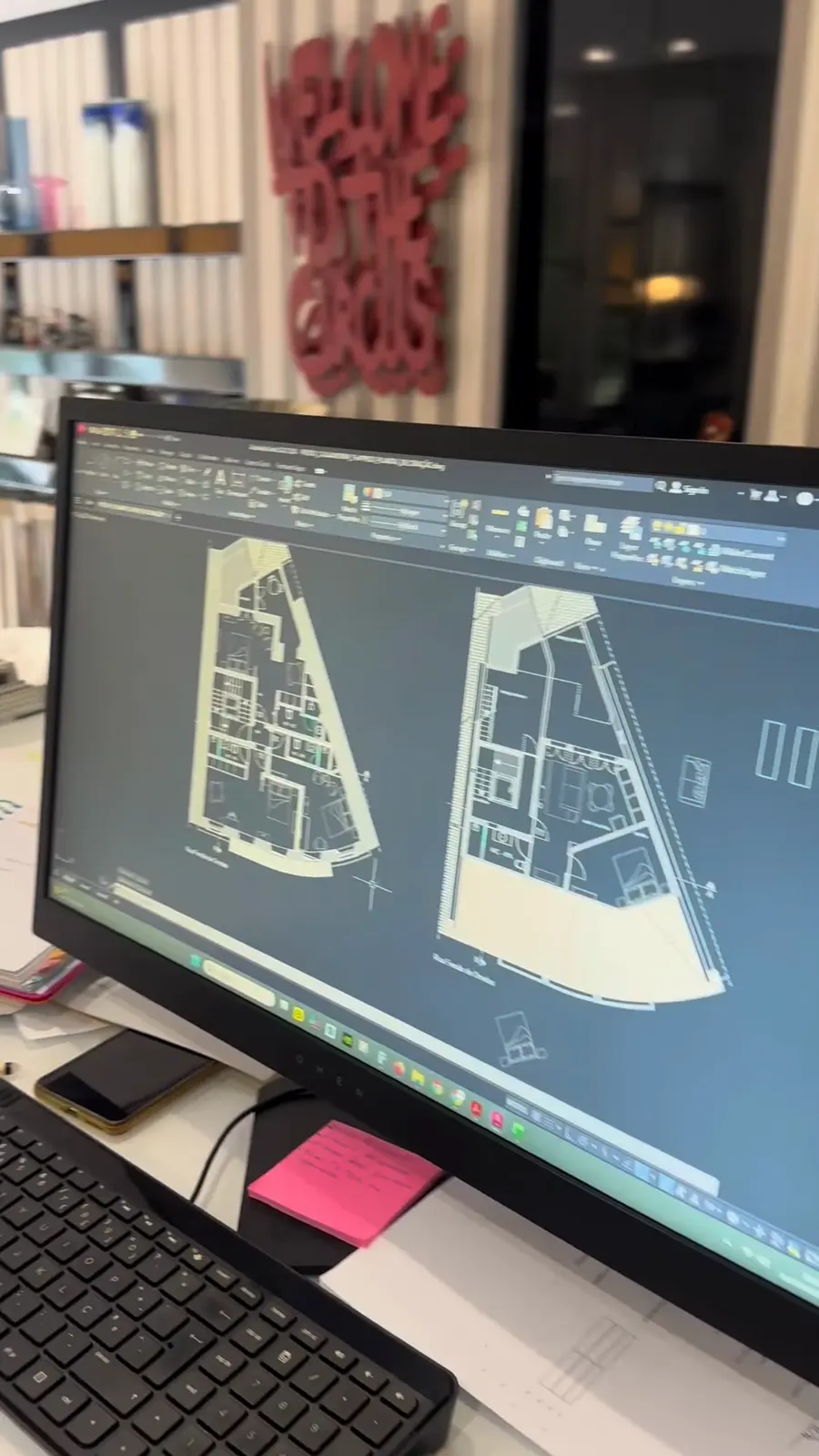
A full project starts by listening to the client and surveying the space: measurements, photographs and the way you live in the home. Then comes the design, with floor plans, elevations and 3D images that show the result before the works begin. Once the design is approved, the project moves on to the works and, at the end, to the decoration: fabrics, wallpaper, lighting and furniture.
One point often causes confusion: the designer's fee is one thing, the cost of the works and the furniture is another. The studio's proposal covers the design and coordination work. Materials, contractors' labour and the pieces you buy are priced separately.
Also check whether the figures include VAT (IVA). In the Autonomous Region of Madeira, the standard VAT rate is 22%.
How to prepare your budget
A clear budget saves time for you and for the studio. Before the first meeting, it is worth organising the information like this:
- Split the total into three blocks: design fees, works, and furniture and decoration.
- Keep a margin for the unexpected, especially in old houses, where the works often bring surprises.
- Set priorities: what must be ready now and what can wait for a second phase.
- Gather any floor plans, photographs and measurements you already have. It saves hours of surveying.
- Collect images of spaces you like and list the pieces you want to keep.
How to compare proposals
Compare what is written, not just the final figure. A cheaper proposal may leave out the 3D images, the revisions or the site visits, which are then charged separately.
Check how many design revisions are included, whether the works are overseen, what deadlines are given and whether VAT is included. Also ask how changes requested halfway through the project are handled.
How we work in Funchal
Traço Elementar is an architecture and interior design studio in Funchal, with a furniture and decor shop, since 2011. Every project goes through four phases: listen, design, build and dress the home.
It all starts with a first meeting, at the studio on Rua Princesa D. Amélia, online or at your home. Once the team knows the space and what you want, it sends a proposal with the scope, the pricing method and the timeline. If you are looking for an interior designer in Madeira, book that conversation and bring your plans and ideas.
Related services
In the shop